Brunei
- Capital
- Bandar Seri Begawan
- Population
- 450K
- Currency
- BND
- Languages
- Malay
Overview
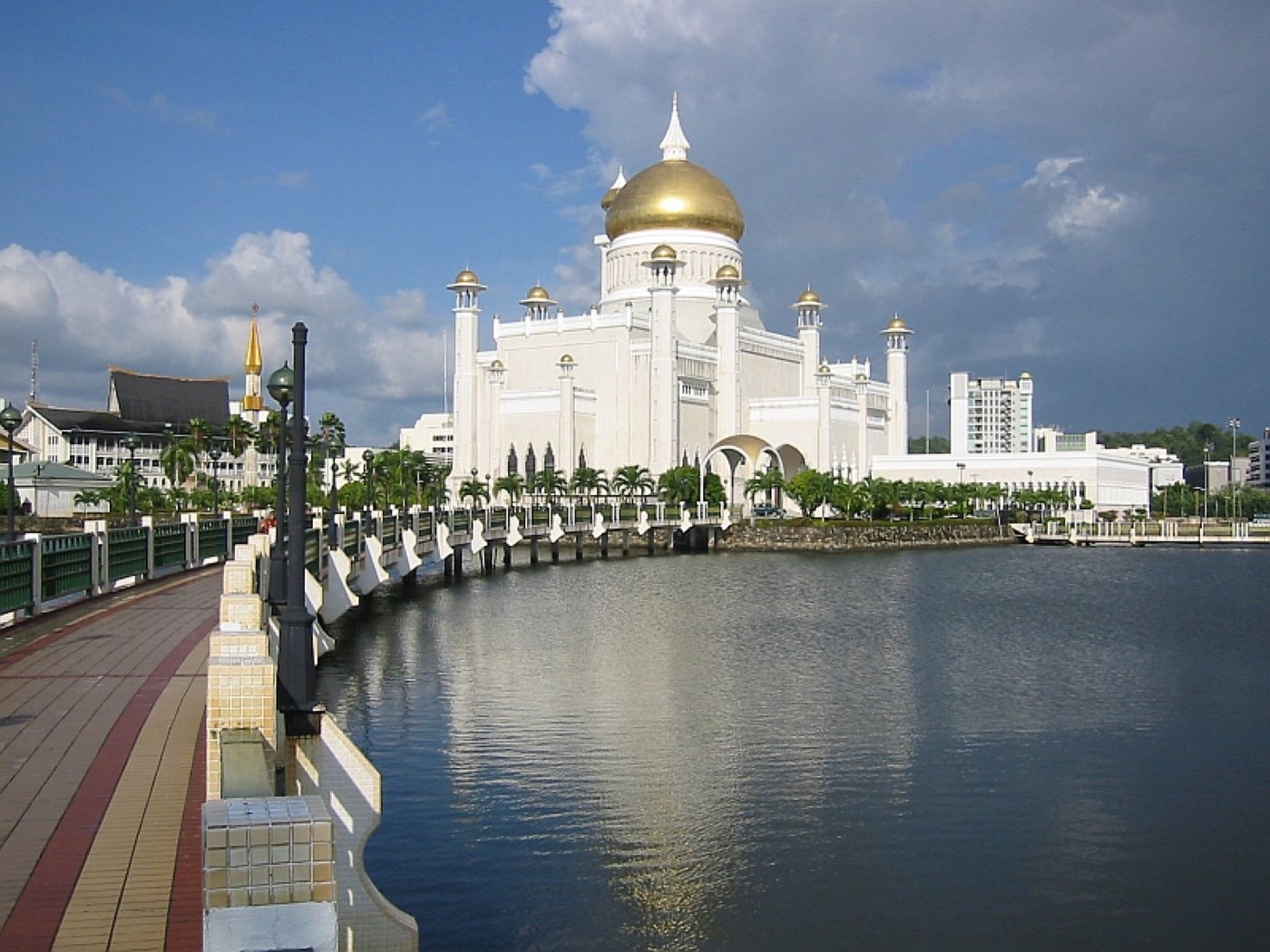
A tiny oil-wealthy sultanate on the island of Borneo, where gilded mosques and royal water villages sit beside untouched rainforest. Travelers come for the opulent Omar Ali Saifuddien Mosque, river cruises spotting proboscis monkeys, and a uniquely peaceful atmosphere. You land in Brunei and the first thing you notice is how quiet it is. The capital, Bandar Seri Begawan, has fewer than 200,000 people, almost no traffic once you leave the main boulevards, and a skyline punctuated by the golden dome of the Sultan's mosque rather than the usual Southeast Asian billboards. Alcohol is not sold publicly, nightlife is essentially limited to hotel lounges and the night market, and most restaurants close well before midnight — which is either a feature or a bug depending on why you came. Brunei rewards travelers who want a short, calm stopover with real jungle at its edges. It is a country of Friday prayers that briefly empty the streets, longhouse-style water villages older than the oil boom, and a rainforest reserve at Ulu Temburong that you can be walking through a few hours after you arrive. If you want one of the easiest introductions to Borneo, a sovereign wealth fund's capital that is unusually walkable, and three or four days without the usual Southeast Asian noise, Brunei will slot in nicely as a side trip from Sabah or Sarawak.
Things to Do
Omar Ali Saifuddien Mosque
The older of the capital's two great mosques, Omar Ali Saifuddien was completed in 1958 and sits on an artificial lagoon that reflects its white marble and 24-carat gold dome at dusk. A replica of a sixteenth-century royal barge floats beside it, used for ceremonial Quran readings. Non-Muslim visitors can enter outside prayer times in proper dress — robes are provided — and the best photograph is taken from the lagoon's opposite bank just after sunset.
Kampong Ayer water village
A 1,300-year-old settlement of houses on stilts in the Brunei River, Kampong Ayer is home to some 10,000 people and is still a fully working community with schools, mosques, fire stations, and restaurants all reached by water taxi. Hire a boat driver from the embankment in the city for an hour — you will also get a trip upriver to spot proboscis monkeys in the mangroves — and then walk the wooden boardwalks of one of the residential kampongs to get a sense of the place on foot.
Ulu Temburong National Park canopy walkway
The park occupies most of the country's Temburong district, a small enclave separated from the main territory and covered in primary rainforest rated among the best-preserved in Borneo. The day trip from Bandar takes you by speedboat across Brunei Bay, then by longboat up the Temburong River to a canopy walkway 50 meters up — the view across unbroken forest is the reason to come. Go with a licensed tour operator; independent access is not permitted.
Jame'Asr Hassanil Bolkiah Mosque
The larger and more recently built of the two major mosques, completed in 1994 for the Sultan's silver jubilee, has 29 golden domes — one for each Sultan to rule Brunei so far. It is an impressive piece of late-twentieth-century Islamic architecture, set in formal gardens on a slight rise on the edge of the city. Visit on a weekday morning outside prayer times; taxis or Dart ride-hail will bring you from the city center in 15 minutes.
Proboscis monkey river cruises
The long-nosed proboscis monkey is endemic to Borneo and the mangroves along the Brunei River around Kampong Ayer are one of the easier places in the world to see troops in the wild. Late-afternoon boat trips leaving the waterfront at around 4 PM catch them coming down to the waterside to feed. You will also likely spot saltwater crocodiles, monitor lizards, and macaques — the combination of hour-long tour and $20 price tag makes this the best-value wildlife outing in the country.
Royal Regalia Museum
In the center of Bandar, the Royal Regalia building houses the ceremonial gifts, chariots, crowns, and outfits from the Sultan's 1992 silver jubilee, plus gifts from visiting heads of state going back decades. It is unapologetically a monument to the royal family, and as a window into a functioning absolute monarchy it is quietly fascinating. Free entry, about 90 minutes, and one of the few air-conditioned midday options in the city.
Tasek Lama Recreational Park
A patch of rainforest right inside the capital, Tasek Lama is where locals walk off their rice before sunset — a small reservoir, a waterfall, and a loop trail through dipterocarp forest all within a 10-minute taxi ride of the main hotels. Go at 5:30 AM for a chance at hornbills, or an hour before sunset for the easier walk and the view over Bandar from the hilltop shelter. Bring water and insect repellent.
When to Go
February to April sees the driest weather, though Brunei's equatorial climate means warm, humid conditions year-round with temperatures generally between 24 and 32 degrees Celsius. Rain is frequent but typically brief — afternoon showers rather than all-day washouts — and the lush rainforest is green in every season. The holy month of Ramadan, which shifts through the calendar each year, brings shorter hours for many restaurants and a subdued daytime pace; the evening iftar buffets that follow are a quiet highlight. Hari Raya at the end of Ramadan and the Sultan's birthday in July bring the country's biggest public celebrations, when the Istana Nurul Iman palace opens to visitors for three days.
Getting Around
Brunei is tiny and most of what you want to see is in or near Bandar Seri Begawan, which makes logistics easy. Purple-numbered taxis and the Dart ride-hailing app (similar to Grab) cover the capital cheaply; buses run to the outer districts on limited schedules, so most travelers stick to cabs. For Ulu Temburong you go on a tour operator's speedboat package that includes all transport and guiding. Rental cars are available at the airport if you want to drive the coast road to Muara and Seria, and roads are in excellent condition. Walking in the capital is pleasant in the morning and evening; midday humidity is serious.
Cost & Currency
Brunei uses the Brunei dollar (BND), pegged one-to-one with the Singapore dollar and accepted interchangeably across the border. Prices sit in the middle of Southeast Asia — cheaper than Singapore, more expensive than much of Malaysia. Expect BND 4–6 for a plate of nasi katok at a local warung, BND 12–20 for a sit-down meal at a mid-range restaurant, and BND 150–300 a night for a comfortable hotel in Bandar. Alcohol is not sold publicly, so no bar tab to worry about; non-Muslim visitors can bring two liters of alcohol and twelve cans of beer into the country per entry. Cards work in hotels and larger restaurants; keep cash for taxis, the night market, and small shops. Tipping is not expected — round up a bill if service was exceptional.
Frequently Asked Questions
- Do I need a visa to enter Brunei?
- US, UK, EU, Australian, and most other Western passport holders enter visa-free for stays ranging from 14 to 90 days depending on nationality. Your passport must be valid for at least six months beyond arrival. Double-check the current rules for your nationality on the Brunei immigration website, as the exact visa-free durations have been adjusted periodically.
- Can I drink alcohol in Brunei?
- Alcohol is not sold publicly in Brunei and Muslims are prohibited from drinking. Non-Muslim visitors over 17 may bring in a limited personal allowance — two liters of liquor or wine plus twelve cans of beer — which must be declared on arrival and consumed privately. Most foreign-brand hotels do not serve alcohol on premises either; plan dry evenings accordingly.
- How long should I plan for a visit?
- Two to four days is the right length for most travelers — one day for the capital's mosques, museum, and water village, one day for Ulu Temburong National Park, and a floating day for a proboscis monkey river cruise or the coast. It makes a strong stopover on a longer Borneo trip combining Sabah, Sarawak, and Brunei.
- What should I wear in Brunei?
- Brunei is a conservative Muslim country and modest dress is expected — covered shoulders and knees for both men and women in most settings, and full head-to-toe coverage if you plan to enter a mosque (robes are provided at the main mosques). Beachwear is fine at hotel pools but otherwise stay covered. Shoes come off at mosques, homes, and some restaurants.
- Is Brunei safe for travelers?
- Yes — Brunei has one of the lowest crime rates in Southeast Asia and is considered very safe for visitors including solo women. The country does enforce strict Sharia-based laws introduced in 2019, so avoid public displays of affection, respect Ramadan daytime fasting rules, and do not take photographs of government or military buildings without permission.
Plan a Trip to Brunei
Have you been to Brunei?
Track 195 countries, 50 states & 63 national parks on your map