National Park · SD · Est. 1903
Wind Cave
Overview
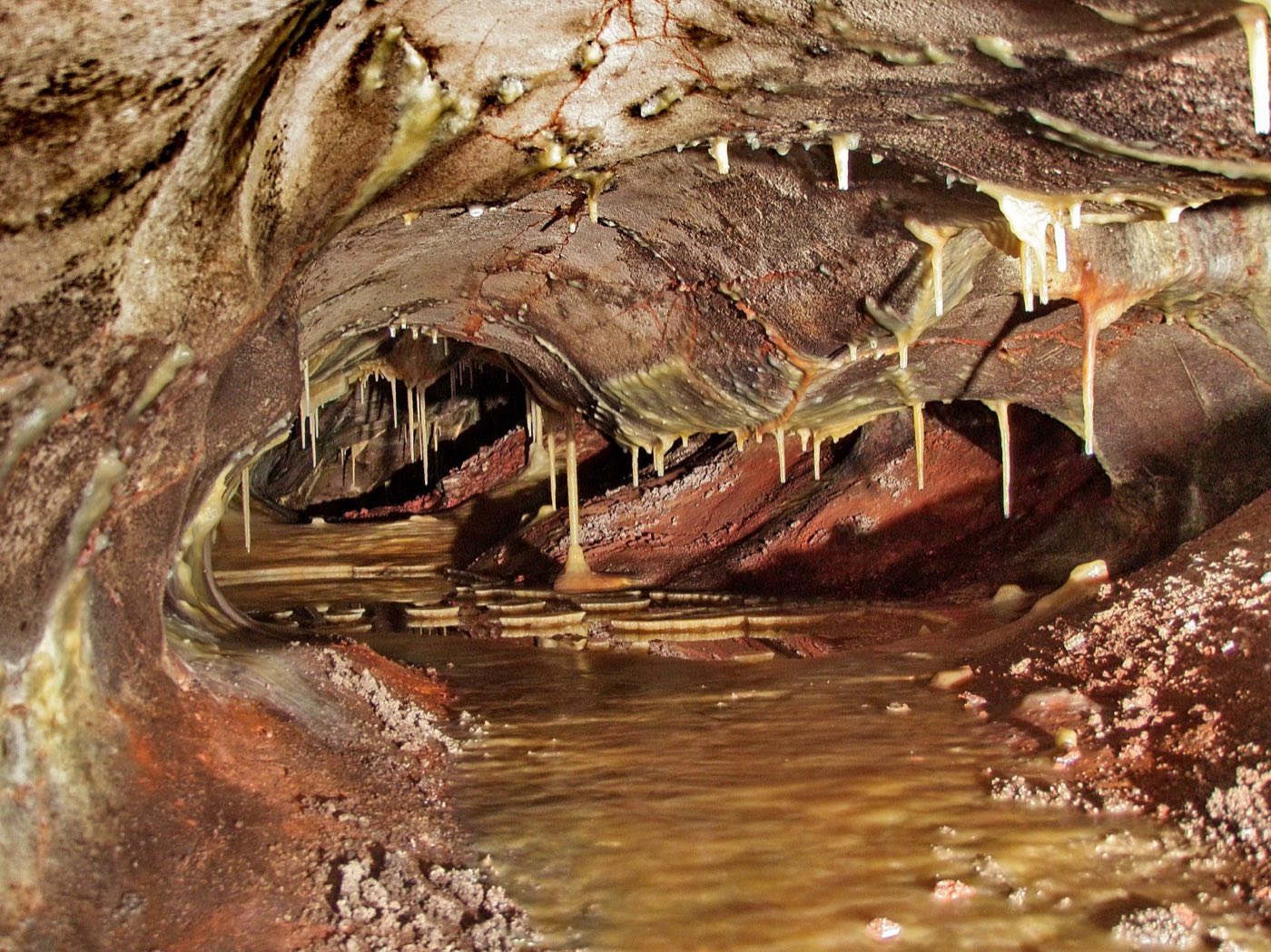
Wind Cave is a park of two worlds stacked on top of each other. Above the surface, the Black Hills of South Dakota rise out of mixed-grass prairie where bison herds graze and elk come out at dusk. Below, one of the longest and most complex cave systems on Earth coils through the limestone — more than 165 mapped miles of passages and counting, decorated with boxwork formations that exist almost nowhere else. The name comes from the cave's breathing entrance, a small natural hole at the surface where air rushes in or out depending on atmospheric pressure — sometimes strongly enough to whistle. That's the same entrance the Lakota knew for generations before it was mapped in the 1880s. Ranger-led tours are the only way down; there's no self-guided cave access. You'll spend an hour or two underground on cool, lit walkways at a constant 54°F while a ranger points out the thin calcite fins of boxwork overhead, and then come back up to a prairie where a bison herd might have wandered across the parking lot in the meantime. It's a smaller park than the South Dakota heavyweights around it, and quieter for it — you can do the essentials in a single day.
What to See & Do
Natural Entrance cave tour for boxwork formations found almost nowhere else
This is the signature tour and the one worth building your day around. You descend through a man-made entrance just beyond the original breathing hole and spend about 75 minutes and 300 stairs working down through decorated passageways. The showpiece is boxwork — thin calcite fins that form honeycomb patterns on the ceilings, found in larger concentrations here than in any other cave on Earth. Tours run year-round and sell out in summer; buy tickets at the visitor center first thing in the morning or book online up to two weeks ahead. Bring a light jacket — 54°F feels colder than it sounds after an hour standing still.
Fairgrounds cave tour through decorated passages
If you want more variety than the Natural Entrance tour offers, the Fairgrounds tour is the one to add. It's a longer route — about 90 minutes and 450 stairs — that works through larger rooms and shows off cave popcorn and frostwork alongside the boxwork. Elevator access both directions means you skip the surface descent, and the pace feels less rushed than the busier morning tours. Rangers tailor the interpretation to the group, so ask about the cave's breathing patterns and the early exploration era when mappers dropped candles down unknown shafts to check for air flow.
Candlelight cave tour for a historic lantern-lit experience
Offered only in summer and limited to small groups, the Candlelight tour walks you through an undeveloped section of cave by lantern light, the way early explorers saw it. You carry your own bucket candle and follow the ranger on unimproved trails — no paved walkways, no electric lights — for about two hours. The slower pace and the dark pressing in beyond your circle of light changes how the cave feels. Closed-toe shoes with traction are required, and tickets are only sold in person at the visitor center. Go first thing in the morning to get a spot.
Wild Cave Tour — a 4-hour spelunking adventure
The most physically demanding option in the park takes six people at a time on a belly-crawling, squeeze-fitting introduction to real caving. You'll wear park-provided coveralls, helmets, and headlamps, and you'll crawl through passages barely wider than your shoulders, rest on your back to look at formations overhead, and come out with bruised knees and a much better understanding of why early mappers came back with such wild stories. Reservations are required well in advance, minimum age 16, and claustrophobes should absolutely skip this one.
Bison and elk herds on the mixed-grass prairie
The surface half of the park is an easy loop drive through prairie where a genetically pure bison herd of roughly 400 head roams freely. Drive NPS-28 (the Bison Flats road) slowly at dawn or dusk — bison jams are common, and giving them at least 25 yards of space is both law and common sense. Elk, pronghorn, and prairie dogs are all regulars. The prairie dog towns near the park's south border are easy to find and a good spot to watch burrowing owls and hunting hawks cycle through.
Rankin Ridge Trail for Black Hills panoramas
This is the park's easy above-ground hike — a one-mile loop through ponderosa pine to the fire lookout tower on Rankin Ridge, the highest point in the park at 5,013 feet. From the tower's base you can see across the Black Hills to Mount Coolidge and the Badlands beyond. The trail climbs gradually, has interpretive signs along the way, and takes about 45 minutes at a casual pace. It's the right post-cave reset — bright sunlight, long views, and a stretch for your legs after an hour of cave stairs.
Wind Cave's breathing entrance — air rushes in and out with barometric changes
The small natural entrance behind the visitor center is how the cave was first found, and it still breathes. When outside pressure drops, air rushes out; when it rises, air rushes in — sometimes fast enough to hear. Rangers keep a flagging ribbon tied near the opening so you can see which way it's moving. The force hints at the scale of unmapped passages still connecting to it; researchers estimate only about five percent of the full cave system has been surveyed. It's a two-minute stop but a memorable one.
Getting There & When to Go
The park is in the southern Black Hills, about an hour's drive south of Rapid City Regional Airport — most visitors fly into Rapid City and make Wind Cave part of a longer Black Hills loop with Mount Rushmore, Custer State Park, and Badlands. The park is open year-round, but cave tour availability peaks from late May through early September when all tour types run. The Candlelight and Wild Cave tours are summer-only. Come in May or September for quieter trails and active wildlife without the July crowds. The cave stays 54°F regardless of season, so a light jacket and sturdy shoes are the only gear you really need.
Where to Stay
There are no lodges inside the park — just the small Elk Mountain Campground near the visitor center, first-come-first-served most of the year with a handful of reservable sites in summer. For beds, the town of Hot Springs sits ten minutes south with historic sandstone hotels and motels at reasonable rates, and Custer is about 30 minutes north with a broader mix of cabins, vacation rentals, and chains. If you're running a full Black Hills loop, staying in Custer puts you within an hour of Mount Rushmore, Crazy Horse, and Custer State Park without giving up quick morning access to Wind Cave.
Frequently Asked Questions
- Do I need to reserve a cave tour in advance?
- In summer, yes — Natural Entrance and Fairgrounds tours often sell out by mid-morning, and Candlelight and Wild Cave tours sell out days or weeks ahead. Book online through recreation.gov up to two weeks in advance. In spring and fall, walking up at opening usually gets you on a tour the same day.
- Can I explore the cave on my own?
- No — all cave access is by ranger-guided tour only. This protects the fragile boxwork and the cave's climate, and it keeps visitors from getting lost in a system where only about five percent of passages have been mapped. There are no self-guided routes.
- Is the cave tour hard on people with bad knees or claustrophobia?
- The Natural Entrance tour involves about 300 stairs, mostly descending. The Fairgrounds tour uses an elevator both directions and is easier on knees. All standard tours use lit, paved walkways with handrails — not tight squeezes. Only the Wild Cave Tour involves crawling, and it's clearly advertised as such.
- Are the bison dangerous to approach?
- Yes — bison are the park's most dangerous animal and injure visitors every year, almost always because someone got out of their car for a photo. Stay in your vehicle during bison jams, give them at least 25 yards on foot, and never position yourself between a cow and a calf.
Plan Your Visit
Book Nearby HotelsHave you visited Wind Cave?
Track all 63 national parks on your map