National Park · NM · Est. 1930
Carlsbad Caverns
Overview
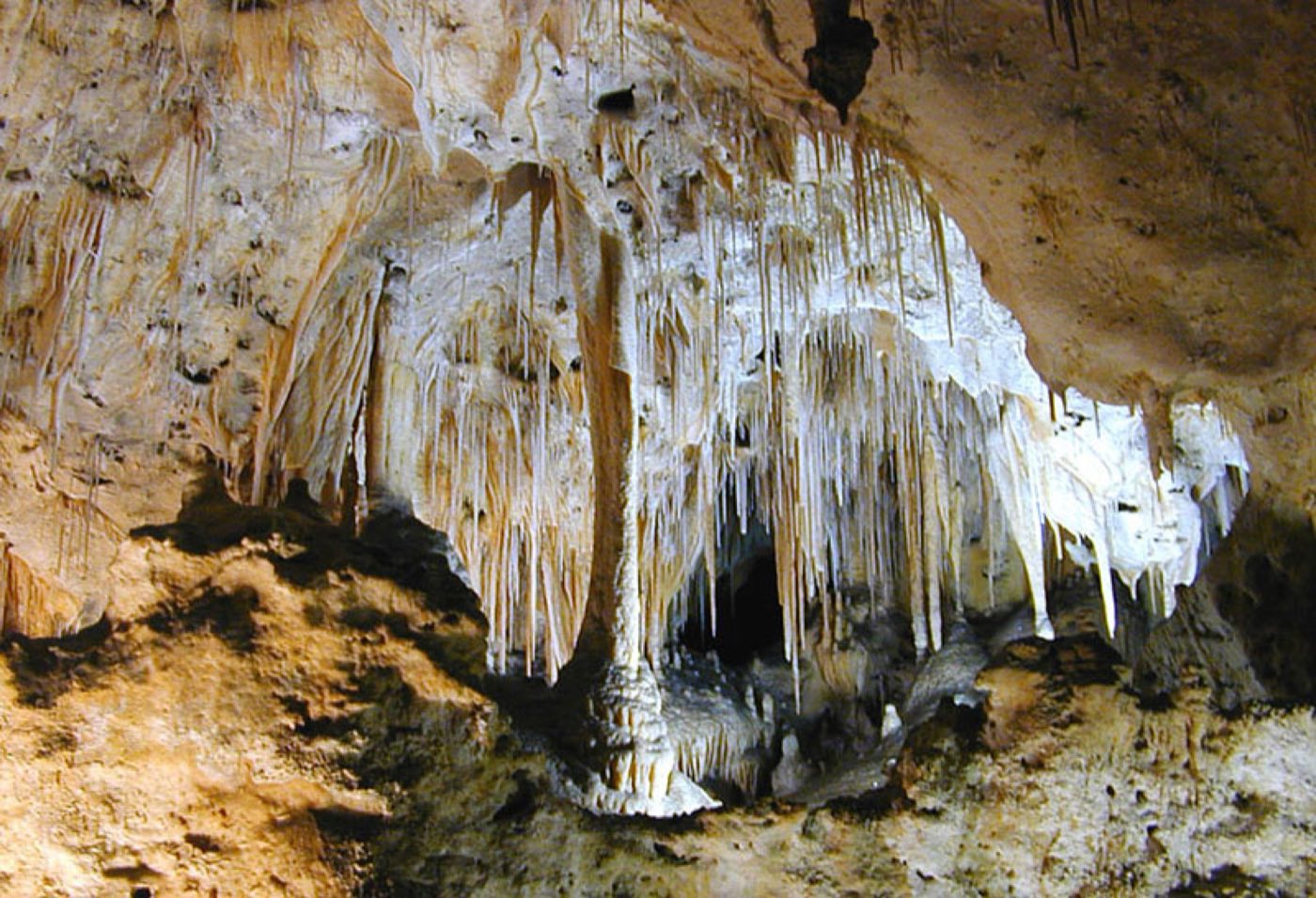
Carlsbad Caverns hides an underground city of limestone beneath a quiet stretch of the Chihuahuan Desert in southern New Mexico. A sulfuric-acid groundwater system carved these chambers over millions of years, leaving a cave system that runs more than 30 miles through the Guadalupe Mountains — and the part the public can see is only the top floor. You enter through a gaping natural amphitheater in the desert, and within a few switchbacks the light drops out, the air cools to 56°F, and the scale of the place starts to land. The Big Room alone is the length of six football fields; some of the stalagmites are three stories tall. Come for the cave, but stay for the surface too — the desert above is quiet and full of canyon wrens, and at dusk in summer you'll sit on stone benches at the cave mouth and watch 400,000 bats corkscrew out in a living tornado for 20 minutes straight. The park sits far from any city, so after the ranger talks end, the darkness and silence out here feel earned.
What to See & Do
Big Room self-guided tour — a 1.25-mile loop 750 feet underground
The Big Room is the largest single cave chamber in North America by volume, and a paved, railed loop takes you completely around it at your own pace. Take the elevator 750 feet down from the visitor center to start, or walk the Natural Entrance first and connect the two. Plan on at least 90 minutes to two hours to really look at formations like the Hall of Giants, Bottomless Pit, and Rock of Ages. Bring a light jacket — it's 56°F year-round — and rubber-soled shoes for the polished stone floor. Photography is allowed; tripods are not.
Natural Entrance Trail's dramatic descent into the cave mouth
This is the way early explorers came in, and it's still the most visceral way to enter the cave. A paved, switchbacking trail drops 750 vertical feet over 1.25 miles, equivalent to walking down a 75-story building. You start in desert sunlight, pass through the swallow-filled twilight zone where the bats live, and end in total darkness at the base of the Big Room. It takes about an hour one-way. If your knees aren't up for the descent, skip it and use the elevator; there's no shame in it and no loss in what you'll see.
Bat Flight Program at dusk (May through October)
From Memorial Day weekend through late October, a ranger-led evening program at the cave's natural entrance amphitheater lets you watch the resident Brazilian free-tailed bat colony leave for the night. The exit usually begins just before sunset and can last 20 to 40 minutes — hundreds of thousands of bats spiral out counter-clockwise in a dense vortex. No cameras or phones allowed; the electronics disturb the bats and the ranger will enforce it. Arrive 30 minutes early for the ranger talk and a bench seat.
King's Palace ranger-guided tour through four decorated chambers
The King's Palace tour is a 90-minute ranger-led walk through a 1.5-mile loop into four of the most heavily decorated chambers in the developed part of the cave, including the King's Palace itself, Papoose Room, and Queen's Chamber. Part of the tour includes a brief blackout where the ranger kills every light so you can feel absolute, total cave darkness. Tickets are limited and reservable through Recreation.gov — book weeks in advance in summer.
Hall of the White Giant adventure caving tour
For experienced hikers willing to crawl, chimney, and belly-slide through undeveloped passages, the Hall of the White Giant is a four-hour, ranger-led caving tour to a remote chamber holding one of the largest pure-white stalagmites in the park. You'll need sturdy boots, gloves, kneepads, a helmet with light (provided), and no claustrophobia. Tours run only a couple times a week and fill out months ahead. It is not for kids and not for anyone who can't lift their own body weight through a squeeze.
Rattlesnake Springs birding oasis in the desert
About 5 miles southeast of the caverns entrance, Rattlesnake Springs is a spring-fed cottonwood grove in the middle of the desert — and one of the best birding spots in New Mexico. More than 330 species have been recorded here, including vermilion flycatchers, wood ducks, and rare summer tanagers. Bring binoculars and visit at dawn for songbird activity. A small picnic area makes it a good companion stop to a cave tour on a hot afternoon.
Slaughter Canyon Cave's undeveloped wild cave experience
Slaughter Canyon Cave is 23 miles from the main visitor center down a rough dirt road, then a steep 500-foot climb on foot to reach the gated entrance. There are no paved trails, lights, or handrails inside — rangers lead a 5-hour lantern tour through a mile of unlit passages and delicate formations. You carry your own flashlight, keep your voice down, and experience the cave closer to the way the original explorers did. Book through Recreation.gov well ahead, and don't plan it the same day as the Big Room.
Getting There & When to Go
The closest airport is El Paso International, about a 2.5-hour drive southwest. Most visitors fly into El Paso or Albuquerque, rent a car, and make a long desert drive; the park is genuinely remote. The town of Carlsbad, 30 minutes north of the cave, is the main base. Timed-entry reservations are required to enter the cave year-round — book at Recreation.gov ideally a few weeks ahead. The cave is a steady 56°F no matter the season, so the visit itself doesn't have a bad weather window. The bat flight runs late May through October; schedule around it if bats are a priority. Summer surface temperatures often clear 100°F in the desert above, so spring and fall are most comfortable for combining cave and outdoor time.
Where to Stay
There is no lodging inside the park — Carlsbad Caverns is a day-use site only. The town of Carlsbad has the deepest set of chain hotels, independent motels, and a handful of decent mid-range options about 30 minutes from the cave entrance. White's City, right at the park turnoff, has a small, older motel and a couple of diners; it's closer but thin on amenities. For something different, Guadalupe Mountains National Park is 40 minutes west over the Texas line and has basic campgrounds at Pine Springs and Dog Canyon; stringing the two parks together is a common itinerary. Book Carlsbad lodging ahead in summer when the town also fills up with oil-field traffic.
Frequently Asked Questions
- Do I need a reservation to enter the cave?
- Yes — timed-entry reservations for self-guided cave access are required year-round and are booked through Recreation.gov. There is a small reservation fee on top of the $15 per-person entrance fee, which is valid for three days. Same-day reservations sometimes open up in the morning but are not guaranteed.
- How cold is it inside the cave?
- The cave holds steady at 56°F (13°C) year-round with about 90% humidity, so wear a light jacket or long-sleeve layer. The floor can be damp and polished — closed-toe shoes with grippy soles are far better than sandals.
- Is the bat flight program worth planning the trip around?
- If you're visiting between late May and October, yes. Hundreds of thousands of Brazilian free-tailed bats exit the natural entrance nightly in a dense vortex that can last 20 to 40 minutes. Phones and cameras are banned at the amphitheater — the electromagnetic signals disturb the bats — so the experience is unusually present for a modern park program.
- Is the cave accessible if I can't walk long distances?
- Partially. An elevator from the visitor center drops directly into the Big Room, and about a third of the Big Room loop is wheelchair accessible on a paved path. The Natural Entrance Trail, King's Palace tour, and all adventure tours involve significant walking, stairs, or crouching and are not accessible.
Plan Your Visit
Book Nearby HotelsHave you visited Carlsbad Caverns?
Track all 63 national parks on your map