United States of America
- Capital
- Washington, D.C.
- Population
- 335M
- Currency
- USD
- Languages
- English
Overview
A continental-scale country that contains several climates, a dozen distinct regional cuisines, and landscapes that range from the red-rock slot canyons of southern Utah to the sugar-white beaches of the Florida Keys. Travelers come for the national park system — probably the best in the world — for New York and Chicago and New Orleans, for the open-road mythology of Route 66, and for weirder, quieter corners most itineraries never reach. What surprises first-time visitors is the scale. Driving from Los Angeles to New York takes four full days of interstate, and you'll pass through desert, high plains, corn country, and the Appalachians without once crossing a border. That scale means you pick a region rather than a country. A week in the Southwest looks nothing like a week in New England, and both look nothing like Louisiana. Pack light, commit to one or two regions, and let the rest go. The cities reward walking and the countryside rewards driving. You'll eat well almost anywhere if you trust the diners, the taquerias, the barbecue joints with no sign out front, and the small-town breweries that have quietly multiplied. Service comes with a brightness that can feel overwhelming if you're not used to it and tipping is not optional — budget 18 to 20 percent on top of restaurant bills and plan accordingly.
Things to Do
Grand Canyon National Park
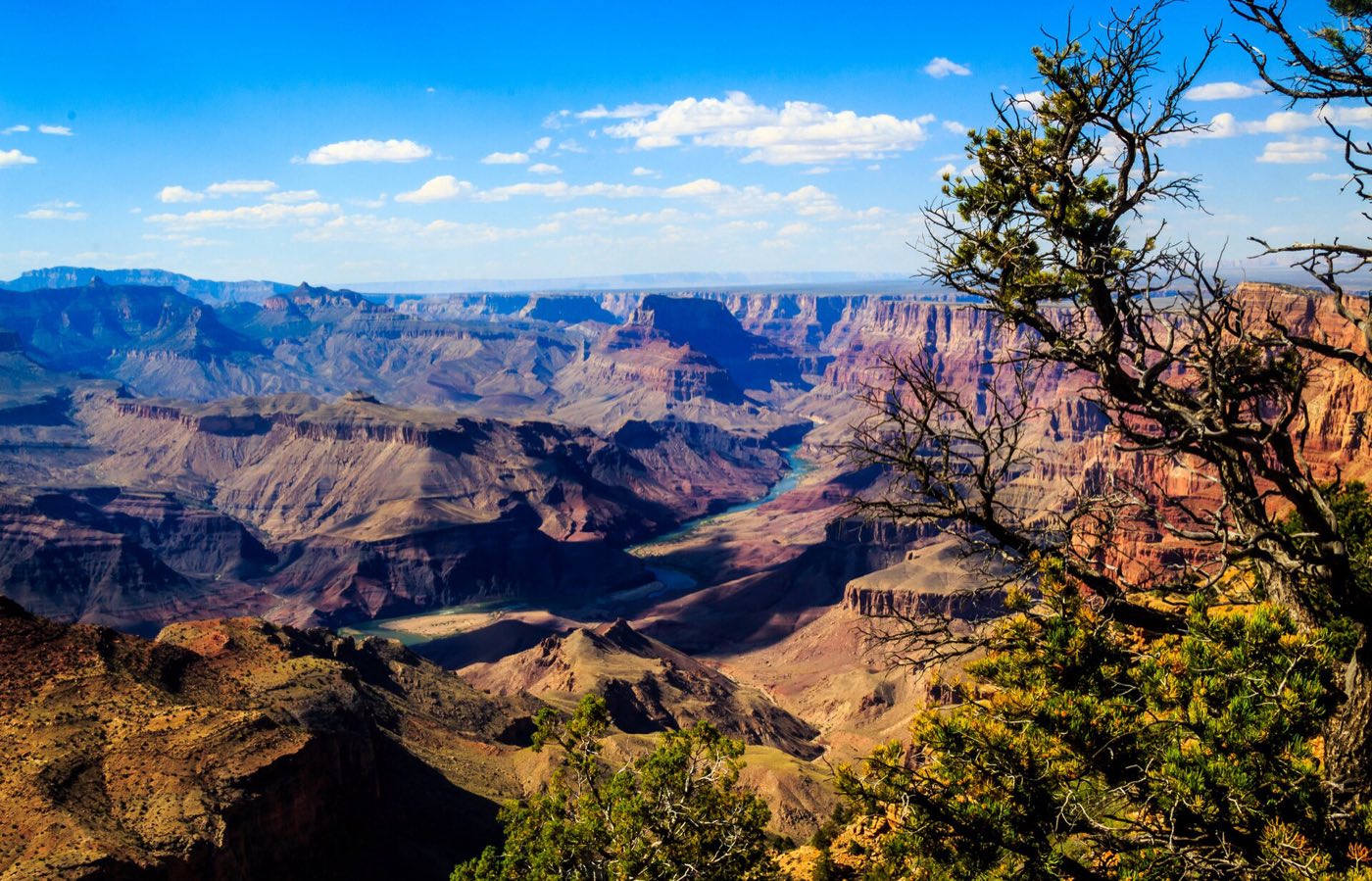
The South Rim sits at 7,000 feet and the canyon drops a mile below your boots, layered in bands of cream and rust that were laid down before anything walked on land. Walk the Rim Trail at sunrise when the light first catches the North Rim across the gulf — most visitors sleep through this and it's the best hour of the day. For more than a quick look, hike a section of the Bright Angel Trail down into the canyon; turn around by mid-morning because the climb back up is brutal and the heat below the rim is real. A day and a night inside the park beats a drive-by every time.
New York City's Statue of Liberty and Central Park
Take the ferry from Battery Park in the morning when the light's still soft over the harbor — book the crown climb weeks ahead if you want it, or settle for the pedestal and the island circuit. Then come back uptown and spend an afternoon walking Central Park end to end. Start at the south entrance near the Plaza, cut through the Ramble, and exit at 110th Street; it's four miles and will teach you more about New York than any museum. Pair it with an evening slice from a proper pizza place and a bar where the TVs play whatever game is on.
Yellowstone National Park geysers and wildlife
The world's first national park sits on top of an active supervolcano, which is why half of it hisses. Old Faithful is the one everyone knows, but the Grand Prismatic Spring and the Upper Geyser Basin boardwalks are more arresting — unearthly blues and oranges ringed with thermophile bacteria. Lamar Valley is where you go at dawn for bison, wolves, and grizzlies; bring binoculars and the patience to sit. Book lodges inside the park a year ahead or stay in Gardiner or West Yellowstone and drive in before the gates clog up.
San Francisco's Golden Gate Bridge
Ride across from the Presidio by bike — it's about 90 minutes to Sausalito, which has a ferry back — and you'll feel the bridge in a way you don't from a car. The fog burns off around noon most days from late spring through summer, so mornings you may be crossing through cloud and hearing the horn. On the city side, spend a few hours in the Mission for burritos and murals, ride the cable car up Powell just once for the sake of it, then walk the hill between Union Square and North Beach. Three neighborhoods and you've seen the place.
Las Vegas Strip and Hoover Dam
The Strip is best taken in late — after ten at night the temperature drops, the fountains at the Bellagio run on the hour, and the crowds peak in a way that's interesting even if you don't gamble. Pick one casino to wander and one buffet to resent, and you've had the experience. Then drive 45 minutes southeast to Hoover Dam, an engineering feat you can walk across between Nevada and Arizona; the dam tour is worth doing, and the bypass bridge view is free. Combine with Red Rock Canyon the morning you fly out for a desert balance.
New Orleans' French Quarter and jazz clubs
Walk Royal Street in the morning before the Bourbon Street hangovers wake up, eat beignets at Café du Monde while the chicory coffee is still hot, and spend the afternoon at the Cabildo or the Ogden Museum to remember that New Orleans is a city with serious history underneath the cocktails. After dark the music starts: Preservation Hall for traditional jazz, the Spotted Cat on Frenchmen for the grittier version, and whoever's playing brass on the corner of Royal and St. Peter. Eat muffulettas at Central Grocery, gumbo at a neighborhood place, and go home happy.
Hawai'i's Na Pali Coast and volcanoes
On Kaua'i, the Na Pali Coast is the 17-mile stretch of jungle cliffs on the island's northwest side — no road goes there, so you see it by boat, by helicopter, or by hiking the punishing Kalalau Trail. An afternoon catamaran out of Port Allen is the sane option. On the Big Island, Hawai'i Volcanoes National Park lets you walk across old lava fields and peer into Kīlauea's steaming caldera. Check whether the volcano is currently erupting before you book — the glow at night, when it's active, is something almost no one else has at home.
Washington D.C.'s Smithsonian museums and National Mall
The Smithsonian is nineteen free museums and the National Zoo, and the good ones will ruin other museums for you. Prioritize the National Museum of African American History and Culture (book timed entry weeks ahead), the National Air and Space Museum, and the Natural History Museum with the Hope Diamond. The Mall itself is a two-mile walk from the Lincoln Memorial to the Capitol, best done at dusk when the monuments light up. Pair it with Arlington National Cemetery across the river and an evening in a U Street restaurant to round out the day.
When to Go
Spring (April to early June) and fall (September to late October) are the sweet spots across most of the country — warm days, cool nights, and no summer heat to fight. The national parks out west are best from late May to mid-October when high passes are open. Ski season runs December to March in the Rockies and the Sierras, and July and August are the peak for New England beaches and the Great Lakes. Avoid the Southeast and Texas from July through September unless you're used to humidity, and know that hurricane season runs June through November along the Gulf and Atlantic coasts.
Getting Around
The United States was built around the car and outside a handful of cities you'll want one. Renting is straightforward at every major airport; gas is cheaper than most of Europe but distances eat it fast. Amtrak's Northeast Corridor (Boston–New York–Washington) is genuinely useful; elsewhere, train travel is slow and scenic rather than practical. Domestic flights are the right choice for anything over about eight hours of driving — Southwest, Delta, and American cover the country cheaply if you book a few weeks out. In New York, Boston, Chicago, Washington, and San Francisco, ditch the car and take the metro; everywhere else, ride-hailing apps fill gaps where transit doesn't reach.
Cost & Currency
The currency is the US dollar (USD), and costs vary hugely by region — a week in rural Tennessee runs a third of what a week in Manhattan will. Expect $4–$6 for a drip coffee, $15–$25 for a casual lunch, and $30–$50 per person for a decent dinner before drinks. Mid-range hotels run $150–$250 a night in cities, less in smaller towns; national park lodges book up a year ahead and aren't cheap. Cards are accepted everywhere including small roadside places and keep tap-to-pay working. Budget for tips: 18–20% at sit-down restaurants, $1–$2 per drink at bars, $2–$5 per bag for hotel porters, and 15–20% for ride-hailing drivers. Sales tax is added at the register and varies by state.
Frequently Asked Questions
- Do I need a visa to visit the United States?
- Citizens of 40+ countries can enter visa-free under the Visa Waiver Program with an approved ESTA, applied for online at least 72 hours before travel and valid for stays up to 90 days. Everyone else needs a B-2 tourist visa, which requires an in-person embassy interview and several weeks of lead time. Bring a printout of your ESTA approval and the return flight details; border officers ask about both.
- Is tipping really expected everywhere?
- Yes, tipping is built into service wages in the US and isn't optional at sit-down restaurants — 18% is standard and 20% is generous. Tip $1–$2 per drink at bars, $2–$5 per bag for hotel bellhops, 15–20% for taxis and ride-hails, and $3–$5 per night for housekeeping. Counter service (coffee, takeout, fast casual) is a lower bar; a dollar or two, or rounding up, is fine.
- How do I handle the size of the country on a first trip?
- Pick one or two regions and stay there. Trying to see New York, the Grand Canyon, and San Francisco on a ten-day trip means more time in airports than anywhere else. A typical first-timer does either the East Coast (New York, Washington, Boston), the Southwest road trip (Las Vegas, Grand Canyon, Zion, Arches), or California (San Francisco, the coast, Yosemite). Commit to a region and go deep.
- Is healthcare a risk I need to plan for?
- Yes — medical costs in the US are genuinely high, and a minor emergency room visit can run into thousands of dollars for a foreign visitor. Travel insurance with medical coverage of at least $100,000 is strongly recommended for any US trip, and more if you're doing adventure activities. Check whether your existing policy covers the US, as many European plans exclude it or cap coverage low.
- Can I drink alcohol everywhere?
- Legal drinking age is 21 nationwide and it's enforced strictly — carry a passport as ID, as most bars won't accept foreign driver's licenses. Open container laws ban drinking alcohol on public streets in most cities (New Orleans and Las Vegas are the famous exceptions), and dry counties still exist in parts of the South. Alcohol is sold at state-run stores in some states and supermarkets in others; ask at your hotel if you're not sure.
Plan a Trip to United States of America
Have you been to United States of America?
Track 195 countries, 50 states & 63 national parks on your map