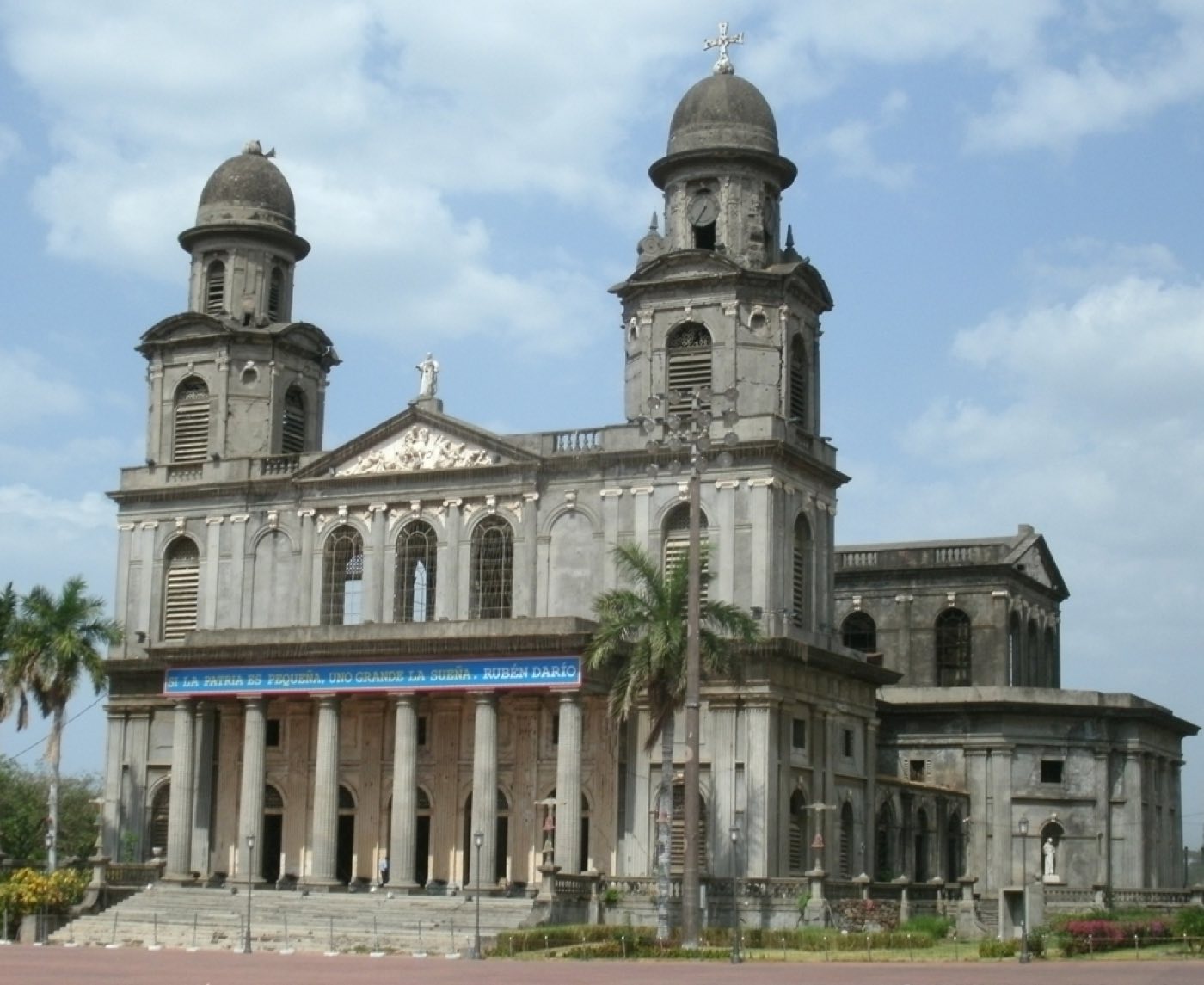
Nicaragua
- Capital
- Managua
- Population
- 7M
- Currency
- NIO
- Languages
- Spanish
Overview
Central America's largest country by area, Nicaragua is a land of active volcanoes, two coasts, two great lakes, and Spanish colonial cities that have aged better than most of the region's. Travelers come for the candy-colored facades of Granada on Lake Nicaragua, surfing the Pacific at Popoyo and San Juan del Sur, climbing the twin volcanoes of Ometepe Island, and — on the Caribbean side — snorkeling the Corn Islands, which feel more Jamaican than Latin American. What the country does well is scale. After Costa Rica next door, Nicaragua can feel empty in a good way — volcanoes you climb without crowds, a colonial city you walk end to end in 20 minutes, beaches where the surf is as good as anywhere in the region and the lineup has six people in it. The Spanish is easier to follow than Guatemalan or Mexican Spanish, prices are roughly half of Costa Rican prices, and the distances are small enough that you can genuinely see the country in ten days. Nicaragua rewards travelers willing to accept that some infrastructure is still catching up and that politics still shape the mood. The 2018 unrest pushed out a lot of tourism that has only partly returned; the current government is authoritarian and protests are illegal, but day-to-day travel is calm and safe in the main destinations. Come with flexibility on timing, a working basic Spanish, and the willingness to go where the buses and lanchas actually run. The payoff is a Central America that still feels unmediated.
Things to Do
Granada's colonial architecture and Isletas boat tours
The Spanish founded Granada in 1524 on the shore of Lake Nicaragua, and the old center — the mustard-and-white cathedral, the Calle Calzada pedestrian street, the bell tower at Iglesia La Merced you climb for sunset — still reads as a colonial city first and a tourist town second. Half a day in town plus a half-day boat tour through Las Isletas, the 365 small islands in the lake formed by the Mombacho volcano's collapse, covers the essentials. Spend two or three nights; the evenings here, with horse-drawn carriages clopping past and parrots in the Parque Central, are the main event.
Ometepe Island twin volcanoes and petroglyphs
An hour across Lake Nicaragua by ferry from San Jorge, Ometepe is a figure-eight-shaped island formed by two volcanoes — Concepcion, still active, and Maderas, extinct with a crater lake at the top. Climbing Concepcion is a serious 10-hour round trip; Maderas is gentler at 8 hours with guide mandatory for both. On the flats, pre-Columbian petroglyphs scatter across farm fields, swim holes at Ojo de Agua take an afternoon, and the two small towns of Moyogalpa and Altagracia each hold a guesthouse scene worth a night. Three nights minimum to do it justice.
Leon's cathedral and volcano boarding at Cerro Negro
The old colonial rival to Granada, Leon is the more intellectual and less touristy of the two — a UNESCO-listed cathedral (the largest in Central America, with access to the bleached-white rooftop), revolutionary murals from the Sandinista era, and a university-town feel around the main plaza. Thirty kilometers north, Cerro Negro is an active volcano whose black ash slopes have become the country's signature adrenaline stop: you hike to the top with a board, put on a jumpsuit, and toboggan down the 700-meter scree at speeds that can hit 60 km/h. Runs through town cost around US$30.
San Juan del Sur surfing and beach scene
The Pacific coast south of Rivas has the country's best and most consistent surf, with breaks ranging from beginner-friendly beach breaks at Playa Maderas to serious reef at Playa Colorados. San Juan del Sur itself is the staging town — a former fishing village turned surf-and-backpacker hub with hostels, surf schools, and a Sunday Funday pool-party circuit that is either the reason you come or the reason you stay in a quieter beach down the road. Shuttle buses connect to the outlying beaches for a few dollars. Board rental runs around US$10–15 a day, beginner lessons US$30–40.
Corn Islands Caribbean diving
The two Corn Islands sit 70 kilometers off the Caribbean coast — Big Corn is reachable by a small commercial flight from Managua or Bluefields, Little Corn by a half-hour panga transfer from Big Corn. Little Corn in particular is what you come for: no cars, no roads, palm-lined beaches, Creole-English alongside Spanish, and fringing reef with nurse sharks, rays, and hammerhead schools in deeper water in season. Dive shops run two-tank dives for around US$70–90. A week here genuinely disconnects you — wi-fi is spotty, everything is walked, and the pace is closer to Jamaica than to the Pacific coast.
Masaya Volcano lava lake
Half an hour from both Managua and Granada, Masaya is one of the few volcanoes in the world where you can drive up to the crater rim and look directly down into an active lava lake. Sunset and after-dark visits run through the national park (entry US$10–15); the glow of the lava intensifies as the light drops, and on active nights you can hear the sulfurous sloshing. Activity varies — check the status before going. The drive up passes through the Masaya craft market town where hammocks, pottery, and leather goods are cheaper and better than in Granada.
Somoto Canyon river adventure
In the far north near the Honduran border, Somoto Canyon was only documented in 2004 when a Czech-Nicaraguan geological survey confirmed it as the oldest rock formation in Central America. Half-day tours combine hiking into the canyon, swimming through narrow sections where the walls close in above you, and floating a stretch in life jackets. Serious guides also offer a three- or four-hour full traverse with a short cliff jump. It is a long day from Leon or an overnight from Esteli — tours typically leave from Somoto town itself, where guides from the Namancambre or Pikin Guerrero cooperatives run reliable trips.
When to Go
November through April is the dry season across the Pacific coast and the country's main travel window — reliable sun, comfortable temperatures, and the big festivals including Granada's poetry festival in February and Semana Santa in the colonial cities. The Caribbean side, including the Corn Islands, has a slightly different pattern; March through May are the calmest seas for diving, and hurricane risk rises from August to October. The wet season from May to October is not a write-off — rains are usually afternoon downpours and the country is at its greenest — but some rural roads flood and the Caribbean can be genuinely blown out in the worst weeks.
Getting Around
Buses are the primary way locals move — chicken buses (retired US school buses) connect every town cheaply and slowly, with express microbuses covering the main intercity routes faster and for a few cordobas more. Shuttle vans aimed at travelers connect the hot stops — Granada, Leon, San Juan del Sur, Ometepe — on scheduled door-to-door runs for US$15–25 a leg. Rental cars are workable for experienced drivers comfortable with potholed secondary roads and loose traffic rules; SUVs are worth the upgrade in the rainy season. The Ometepe ferry runs from San Jorge several times a day; the Corn Islands are reached by La Costena flights from Managua (~45 minutes).
Cost & Currency
Nicaragua uses the Nicaraguan cordoba (NIO), roughly 36–37 to the US dollar, and US dollars are widely accepted in tourist areas — prices are often quoted in both. The country is inexpensive: a comida corriente lunch of chicken, rice, beans, and plantain runs US$4–6, a mid-range hotel room in Granada or Leon US$40–80, a beachfront cabana in San Juan del Sur US$30–120 depending on season. Shuttles between main towns run US$15–25, an Ometepe ferry passage US$2–4, a dive on the Corn Islands US$35–45 per tank. Cards are accepted at mid-range hotels and restaurants; keep cash for buses, market meals, and rural stops. Tip 10% at sit-down restaurants; a US$1–2 per-bag tip at hotels is appreciated.
Frequently Asked Questions
- Is it safe to travel in Nicaragua right now?
- Day-to-day tourism in the main destinations — Granada, Leon, Ometepe, San Juan del Sur, Corn Islands — is calm and safe, with low violent crime against travelers and a visible tourist police presence. The political situation remains authoritarian and protests are effectively banned; do not participate in or photograph any political gathering. Check your government's travel advisory before booking — the US State Department had the country at a Level 3 as of early 2026.
- Do I need a visa to visit Nicaragua?
- Most travelers from the US, Canada, UK, EU, Australia, and Latin America receive a 90-day tourist entry on arrival for a US$10 tourist card fee, payable in cash at the airport. Your passport needs six months validity beyond your planned departure date. The CA-4 agreement covers Nicaragua, Honduras, El Salvador, and Guatemala as a single 90-day zone — time spent in those four countries counts toward the same limit.
- Is Nicaragua cheaper than Costa Rica?
- Yes, significantly — prices run roughly 40 to 60% below Costa Rican levels for accommodation, food, and activities. Surf camps, Spanish schools, and beach-town guesthouses are notably better value. The tradeoff is that tourism infrastructure is a step behind Costa Rica's: fewer direct flights, more basic road conditions, and fewer services bundled for international travelers.
- Should I drink the tap water?
- No. Stick to bottled or purified water throughout the country. Most hotels and guesthouses provide filtered water for refilling bottles; many restaurants use purified water for ice and food preparation but confirm if you are sensitive. Stomach bugs are the most common traveler complaint. Fresh juices (jugos naturales) from reputable places with purified water and ice are safe and are one of the pleasures of the country.
- Do I need to speak Spanish?
- Basic Spanish will genuinely improve your trip. English is spoken at tourist-facing hotels, dive shops, and surf schools, and widely on the Corn Islands where Creole English is a mother tongue, but most buses, small restaurants, and rural interactions will be in Spanish. A phrasebook and a willingness to try go a long way; Nicaraguan Spanish is slower and clearer than Guatemalan or Caribbean varieties and is a good place to practice.
Plan a Trip to Nicaragua
Have you been to Nicaragua?
Track 195 countries, 50 states & 63 national parks on your map