Costa Rica
- Capital
- San José
- Population
- 5.2M
- Currency
- CRC
- Languages
- Spanish
Overview
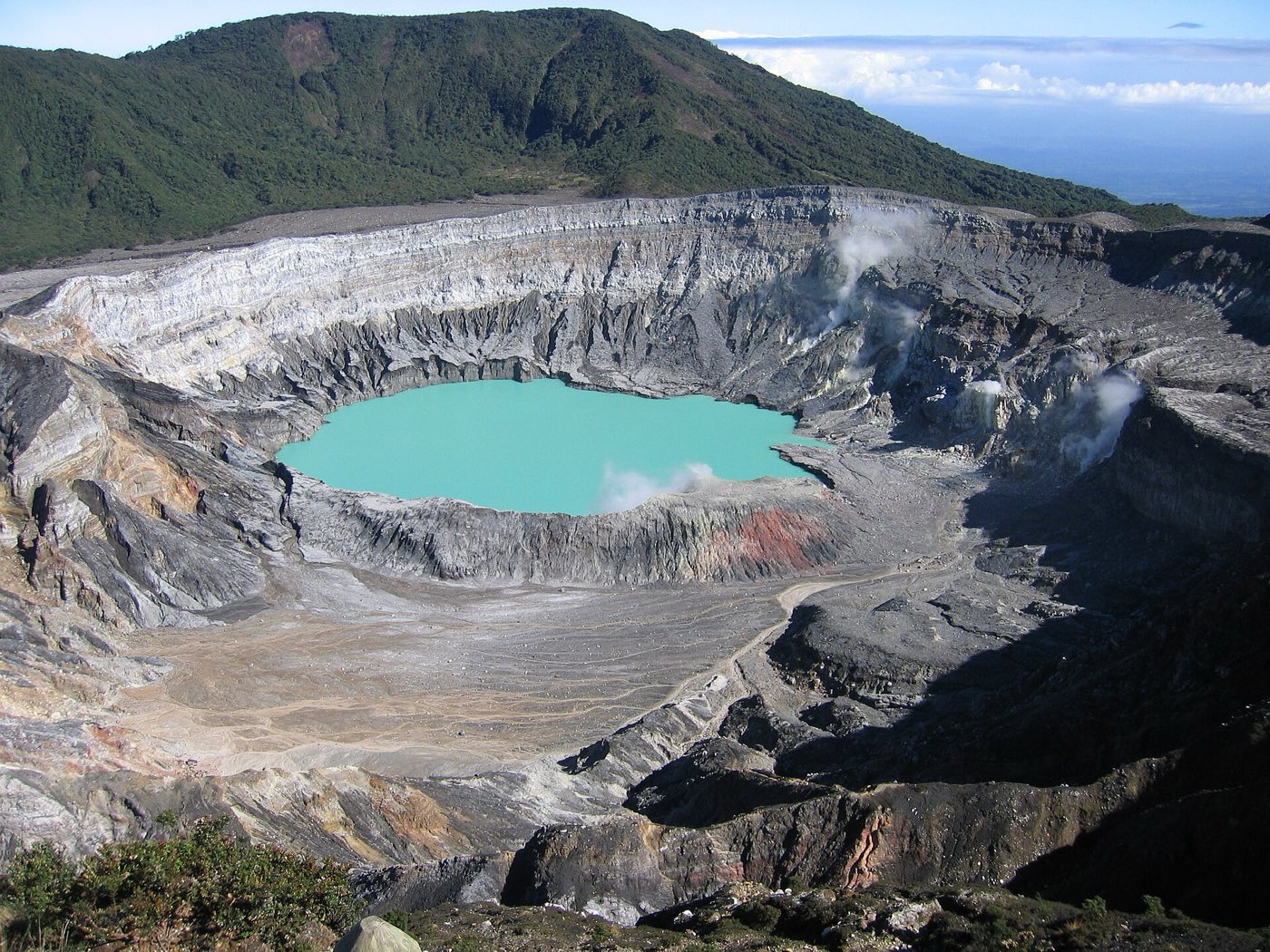
A small Central American country that punches well above its size, Costa Rica packs active volcanoes, cloud forests, lowland rainforest, two coastlines, and about five percent of the world's known species into a territory smaller than West Virginia. Travelers come for the hanging bridges of Monteverde, the perfect cone of Arenal and its hot springs, sloth-filled canopies in Manuel Antonio, and surf towns on the Nicoya Peninsula where the mornings start before sunrise with a wax on the board. What you notice after a day is the pace. Pura vida is not just a phrase printed on a T-shirt — it is a genuine way of being that slips into your shoulders by the third morning. Breakfast runs long over gallo pinto and coffee from a farm you can see from the porch. The sloth in the tree above your cabina does not care about your schedule. The howler monkeys wake you at five-thirty, the rain comes at two, and by six the macaws are flying back across the canopy in pairs. Costa Rica rewards travelers who want active days and soft landings. Infrastructure is genuinely good for Central America — roads are mostly paved on the main routes, tour operators are professional, English is widespread, and the tap water in most of the country is safe. Go for a week of pure beach or two weeks mixing rainforest and coast; whether you are thirty with a surfboard or sixty with binoculars, the country finds a way to meet you where you are.
Things to Do
Monteverde Cloud Forest Reserve
At 1,400 meters in the Tilarán mountains, Monteverde sits in a cloud forest where moisture condenses straight out of the clouds and the trees drip constantly with epiphytes and moss. Walk the trails at dawn to improve your chances of seeing the resplendent quetzal, the long-tailed bird that is essentially Costa Rica's national emblem; the hanging bridges at nearby Selvatura or Sky Walk put you at canopy level where most of the life actually happens. Stay in the small town of Santa Elena for easy access to the reserves, and go to sleep listening to the forest click and whistle outside your window.
Arenal Volcano and hot springs
The perfect cone of Arenal rises 1,670 meters over the Northern Plains and, while the volcano stopped actively erupting in 2010, the geothermal heat below it still feeds a series of hot-spring resorts that range from free natural rivers to full-on spa complexes. Spend a morning hiking the lava trails at Arenal Volcano National Park — the 1968 flow left a moonscape now slowly reforesting — and an afternoon at Tabacón or Baldi easing into pools that range from tepid to bracing. La Fortuna Waterfall nearby gives you a 70-meter cascade and a cold plunge pool at its base.
Manuel Antonio National Park
The smallest national park in Costa Rica is also one of the most productive — a compact stretch of Pacific coast where rainforest drops straight onto white-sand beaches, and where you can see three species of monkey, two species of sloth, agoutis, iguanas, and toucans within a morning's walk. Hire a naturalist guide at the entrance (they spot animals you will miss) and arrive at opening to beat both the heat and the afternoon tour buses. Finish the day on Playa Manuel Antonio itself, a protected cove inside the park with calm swimming and pelicans diving just offshore.
Tortuguero sea turtle nesting canals
On the northern Caribbean coast, Tortuguero is reached only by boat or small plane from San José. Between July and October, green sea turtles nest on the long black-sand beach, and during the same window you can join guided night walks where a spotter leads you to a nesting female to watch her lay her eggs at a respectful distance. By day, long narrow boats thread the blackwater canals behind the beach, where caimans sun on logs, spider monkeys hang from the trees, and kingfishers flash between the branches. Stay two nights minimum — the logistics do not justify less.
Corcovado National Park on the Osa Peninsula
National Geographic once called the Osa Peninsula the most biologically intense place on earth, and Corcovado is its heart — the largest intact lowland rainforest on the Pacific coast of Central America, home to tapirs, all four Costa Rican monkey species, scarlet macaws in flocks, and the country's last secure jaguar population. Visits require a licensed guide and an overnight reservation at Sirena ranger station in the park's interior; the hike in from San Pedrillo is long and hot and rewarded with encounters you will not get elsewhere. Base yourself at Drake Bay or Puerto Jiménez for logistics.
Nicoya Peninsula surf towns
The west-facing peninsula north of Puntarenas catches Pacific swell all year and has built a cluster of relaxed surf towns along its coast — Santa Teresa and Mal País at the southern tip, Nosara and Playa Guiones further north, each with its own rhythm. Santa Teresa runs younger and louder; Nosara is quieter, more yoga-and-slow-mornings, with a long beach break forgiving to learners. Rent a board and a scooter, stay in a wooden cabina walking distance to the sand, and let the days settle into a loop of sunrise surfs, coffee, siesta, and sunset sessions.
Río Celeste waterfall in Tenorio Volcano National Park
A chemical reaction between two streams carrying volcanic minerals turns the Río Celeste an impossible milky turquoise where they meet — called the teñideros, the dye-works, by locals. A three-kilometer round-trip hike in Tenorio Volcano National Park brings you to the falls, which plunge thirty meters into a perfectly blue pool at the base; from there a spur trail climbs to the teñideros themselves where you can watch the color appear in front of you. Swimming is not allowed in the falls but the walk, on a well-maintained forest trail, is worth the drive from La Fortuna or the Nicoya side.
When to Go
December through April is the dry season across most of the country and the sweet spot for the Pacific coast and the interior — sunny mornings, warm afternoons, minimal rain. May through November is the green season with daily afternoon showers, lower prices, fewer crowds, and the landscape at its most lush. The Caribbean side is on a different schedule entirely and often has its best weather in September and October, when the rest of the country is at its wettest. Sea turtle nesting at Tortuguero runs July to October; humpback whales are on the Pacific coast from July to October and again briefly in December and January.
Getting Around
Driving yourself is the most flexible option for covering the country, and a small 4x4 is worth the extra money once you leave main highways — secondary roads can rough up quickly and river crossings are not unusual in the wet season. Rental companies add mandatory insurance that makes the final rate higher than the quoted online price; factor it in. Domestic flights on Sansa cut what is a six-hour drive from San José to the Osa Peninsula down to an hour and are reasonably priced. Buses are cheap and efficient between the main hubs. For shorter hops or to avoid driving in downtown San José, shared shuttles run by Interbus and Grayline will pick up at your hotel for $50–$70 per leg.
Cost & Currency
Costa Rica uses the Costa Rican colón (CRC) but US dollars are accepted almost everywhere and most prices at hotels, tours, and restaurants are quoted in dollars. It is more expensive than its neighbors — a mid-range hotel room runs $80–$160, a sit-down dinner for two with drinks $35–$60, a guided half-day tour $60–$100 per person. Budget travelers can do it for much less with hostels, sodas (local lunch counters) for $5–$8 meals, and public buses. Cards are widely accepted in cities and at tour operators; cash is useful for sodas, small vendors, and rural areas. Restaurants add a 10% service charge automatically, so additional tipping is optional — round up if the service was warm.
Frequently Asked Questions
- Do I need a visa to visit Costa Rica?
- Travelers from the US, Canada, the UK, the EU, Australia, and most Latin American countries do not need a visa and receive a 90-day entry stamp on arrival. Your passport must be valid for at least one day beyond your stay, and Costa Rican immigration sometimes asks for proof of onward travel within 90 days. Check current rules for your specific passport before booking.
- Is Costa Rica safe for travelers?
- Generally yes — it is among the safer countries in Central America and has a well-developed tourism infrastructure. The main risk is petty theft, particularly car break-ins at beach parking lots and trailheads; do not leave anything visible in a rental car, ever. Use hotel safes, watch your belongings on buses, and in San José stick to the safer neighborhoods like Escazú, Santa Ana, or Barrio Escalante after dark.
- Is the tap water safe to drink?
- In most of the country, yes — Costa Rica has one of the best water systems in Latin America and tap water is potable throughout San José, the Central Valley, and most popular tourist regions. A few remote rural areas and some parts of the Caribbean coast are exceptions; your hotel will tell you if the local supply is not drinkable. Fill a reusable bottle and cut down on plastic.
- How long should I plan for a first trip?
- Ten days to two weeks is the sweet spot for a first visit. A common itinerary is three nights in the Arenal area, three in Monteverde, and four to seven on the Pacific coast — Manuel Antonio for easy wildlife, the Osa Peninsula for serious rainforest, or the Nicoya Peninsula for surf and slower beaches. A week is workable if you pick two regions instead of three and accept the longer drives in between.
- Do I need to speak Spanish?
- No — English is widely spoken in tourist areas, at hotels and tour operators, and by most taxi drivers in destinations that see foreign visitors. A few basic Spanish phrases go a long way in smaller sodas and with drivers on quieter routes, and Costa Ricans (Ticos) are patient and encouraging with learners. Locals say pura vida as hello, goodbye, thank you, and you're welcome, and you will be saying it yourself by day three.
Plan a Trip to Costa Rica
Have you been to Costa Rica?
Track 195 countries, 50 states & 63 national parks on your map