Haiti
- Capital
- Port-au-Prince
- Population
- 11.6M
- Currency
- HTG
- Languages
- French, Haitian Creole
Overview
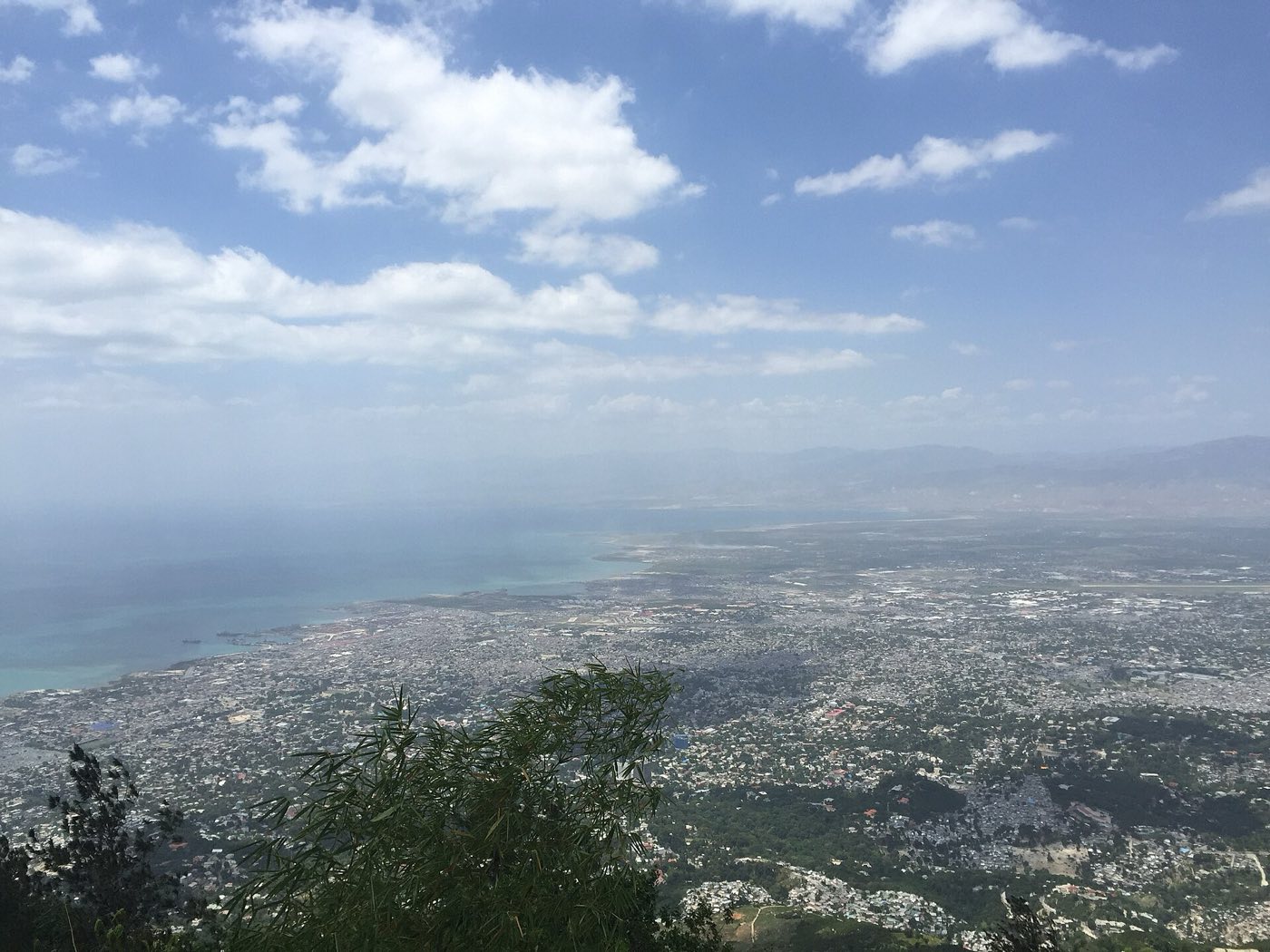
The first Black republic in history, born from the only successful slave revolution the world has seen, Haiti occupies the western third of Hispaniola with a cultural and historical weight that is entirely its own. This is a country that invented its own religious synthesis in Vodou, a distinctive creole language, a naive-art movement that now hangs in major museums, and a national identity forged in a nineteen-year independence war against Napoleonic France. It is also, as of early 2026, a country in acute crisis. Armed gangs control most of Port-au-Prince and roughly 80% of the capital; Toussaint Louverture International Airport has been closed to commercial flights for extended stretches since late 2024 after gangs fired on passenger jets; the US, UK, Canada, and most European governments advise against all travel to Haiti, and a UN-backed Multinational Security Support mission led by Kenya is working — unevenly — to restore order. Kidnapping, carjacking, sexual violence, and gunfire in urban areas are daily realities for Haitians, and travel insurance effectively does not cover the country. This page is written for context, not as a come-hither invitation. If you are considering a trip, assume that most of what follows applies only once security stabilizes; if you are going now, go with a trusted local contact, accept that plans will change in ways that could be dangerous, and read your government's advisory carefully before you book anything.
Things to Do
Citadelle Laferrière hilltop fortress UNESCO site
In the north near Cap-Haïtien, a mountaintop fortress built in the early 1800s by Henri Christophe to defend the new Black republic against a French reconquest — and the largest fortress in the Americas. Reached by a steep hour-long hike or horseback ride from Milot, it sits on a 900-meter peak with cannon still mounted on the ramparts and views across to Cuba on clear days. The north has been meaningfully safer than the capital through the current crisis and remains the most viable region for visitors who still go.
Sans-Souci Palace ruins
At the foot of the Citadelle and part of the same UNESCO inscription, Sans-Souci was Christophe's answer to Versailles — a royal palace intended to show the world that a country founded by formerly enslaved people could match any European court. An 1842 earthquake gutted it, and what remains is a roofless but ornate shell of baroque arches, fountains, and terraced gardens. Walk it in the morning before the heat, and pair it with the Citadelle in the same day trip from Cap-Haïtien.
Jacmel's colonial architecture and arts scene
On the southern coast, Jacmel is a 19th-century port town of ironwork balconies and coffee-merchant mansions that influenced the shape of New Orleans. Its Carnival each February, one of the great papier-mâché spectacles of the Caribbean, spills parades of enormous masks and devils through streets that feel like a film set. Access from Port-au-Prince has been irregular through the current crisis; when it opens up, Jacmel is the easiest introduction to the country for outsiders.
Bassin Bleu turquoise waterfalls near Jacmel
A series of three cobalt pools stepped into a limestone gorge in the hills above Jacmel, reached by a 40-minute hike and a rope descent into the deepest basin. Local guides from the village of La Vallée run the route and help visitors through the slippery final scramble. It is the kind of place that still sells Haiti to anyone lucky enough to see it — the water is genuinely the color the name suggests, and the gorge stays cool even at the height of summer.
Île-à-Vache island retreat
A small island off the southern coast near Les Cayes, Île-à-Vache has remained one of the quieter corners of Haiti throughout the current crisis because it sits well away from the gang-contested zones around the capital. A handful of low-key resorts run beach bungalows where the schedule is fishing, swimming, reading, and eating lambi (conch) — a different country from the capital by feel. Getting there means flying to Les Cayes from the provinces or going by road when secure.
Vodou ceremonies and iron-market art
Vodou is the foundational religious inheritance of Haiti — a syncretic Dahomean-Kongo-Catholic tradition with a full pantheon of lwa — and its influence runs through everything from the flags beaded by Port-au-Prince craftsmen to the oil-drum iron sculpture of the village of Croix-des-Bouquets. Attending ceremonies as a foreigner is possible only through a trusted local contact and with real respect; buying art, commissioning work, and visiting the Iron Market are gentler entry points when the security picture allows.
Labadee beach peninsula
A walled-off cruise-ship destination on the northern coast leased to Royal Caribbean — pristine beaches, zip lines, and watersports contained within a fenced perimeter that is effectively sealed off from the rest of the country. It is the easiest way to set foot on Haitian soil during the current crisis, and for better or worse it is how most visitors have experienced the country in the past decade. Cruise lines have continued calls at Labadee through the instability, citing the peninsula's separation from mainland travel routes.
When to Go
November through March is the traditional dry and cool season, with pleasant 25–30°C days and lower humidity — historically the best stretch for historic-site visits in the north and Carnival in Jacmel each February. The summer and autumn bring heat, humidity, and hurricane risk from June through November, with Haiti more exposed than most Caribbean nations because of deforestation and weak infrastructure. That said, weather is the least of the considerations right now — the overriding question is whether the security situation at the time of your trip allows movement at all, and that shifts month by month rather than season by season.
Getting Around
Honestly, this is the difficulty. Roads between cities are often blocked by gangs operating checkpoints demanding payment, and the main highway between Port-au-Prince and the north has been cut for long stretches in 2024 and 2025. Domestic flights on Sunrise Airways have become the practical way to move between Port-au-Prince, Cap-Haïtien, and Les Cayes when the main airport is open. Within cities, tap-taps (brightly painted shared pickups) are how Haitians move, though they are not a realistic option for visitors in the current climate — hire a vetted driver through your hotel or a trusted contact. Do not drive yourself. A guide with real local knowledge is not a luxury here; it is the core of whether your trip is safe or not.
Cost & Currency
Haiti uses the Haitian gourde (HTG), though the currency has depreciated sharply during the crisis — roughly 130–140 HTG to 1 USD in early 2026 and volatile. US dollars circulate widely and are accepted at almost all hotels, tour operators, and larger restaurants; in fact many businesses quote prices only in dollars. Cash is king and ATMs in Port-au-Prince have been unreliable or unavailable during gang escalations, so bring US dollars in small bills for the trip. A mid-range hotel in Cap-Haïtien or Jacmel runs US$80–$150, a meal US$10–$20, and a private driver-guide US$80–$150 per day. Card payments work at major hotels but assume you will need cash everywhere else.
Frequently Asked Questions
- Is it safe to travel to Haiti right now?
- No — as of early 2026, the US State Department, UK FCDO, and Canadian government all have Level 4 Do Not Travel advisories in place for Haiti because of armed gangs controlling most of Port-au-Prince, kidnapping, and sexual violence. Most commercial insurance will not cover the country. If you still choose to go, go only with an established local contact and follow security guidance day by day.
- Is the airport open?
- Toussaint Louverture International in Port-au-Prince has been closed or operating at reduced capacity for extended periods since November 2024, when gangs fired on a commercial flight. Cap-Haïtien International in the north has continued operating more reliably and is the entry point most visitors use when they go at all. Check your airline and the FAA Notice to Airmen close to travel.
- Do I need a visa?
- No — citizens of the US, UK, EU, Canada, and most Latin American and Caribbean countries do not need a visa for stays of up to 90 days. You get a stamp on arrival. A valid passport with at least six months' remaining validity is required. The practical barrier is not the visa but whether flights are running.
- Can I visit a Vodou ceremony?
- Historically yes, through a trusted local contact or anthropological tour. In the current environment this should be arranged only by someone with deep on-the-ground knowledge — ceremonies are genuine religious events, not performances, and moving around after dark in the capital is unsafe. Dress modestly, bring an offering your host suggests, and do not photograph without explicit permission.
- What language will I need?
- Haitian Creole is the mother tongue of essentially everyone, and French is the second official language used in government and education. English is spoken in tourism businesses in Cap-Haïtien and Labadee and by returned diaspora, but outside those circles it thins out quickly. A working phrase-book of Creole greetings will be appreciated; full French fluency is a genuine asset if you have it.
Plan a Trip to Haiti
Have you been to Haiti?
Track 195 countries, 50 states & 63 national parks on your map