Dominican Republic
- Capital
- Santo Domingo
- Population
- 11.2M
- Currency
- DOP
- Languages
- Spanish
Overview
The Dominican Republic shares the island of Hispaniola with Haiti, and it is the most visited country in the Caribbean — which cuts two ways. Much of what travelers see is the all-inclusive coastline around Punta Cana and Bávaro, and those resorts do what they do well. But the rest of the country — the colonial core of Santo Domingo, the humpback-whale bay at Samaná, the merengue bars of Puerto Plata, the mountain cloud forests around Jarabacoa — is the part most visitors miss. Santo Domingo's Zona Colonial is where European colonization of the Americas started in 1496 and remains one of the most genuine colonial quarters in the Caribbean — narrow cobbled streets, the first cathedral built in the New World, late-afternoon dominoes in shaded plazas. Two hours north, the Samaná Peninsula draws thousands of humpback whales to its warm bay between January and March for one of the great marine wildlife spectacles in the hemisphere. And everywhere on the island, merengue and bachata provide the constant soundtrack — these are Dominican inventions, and the Saturday night you happen into a small-town colmado with the bass turned up and the dance floor full will outlast most of your resort memories. Travelers who come just for a beach week have plenty to work with, but the country rewards travelers who rent a car for a few days, leave the resort gates, and see what it looks like when you stop at a pica pollo stand on a dusty road, ask for directions in Spanish, and get both an answer and an opinion.
Things to Do
Zona Colonial in Santo Domingo
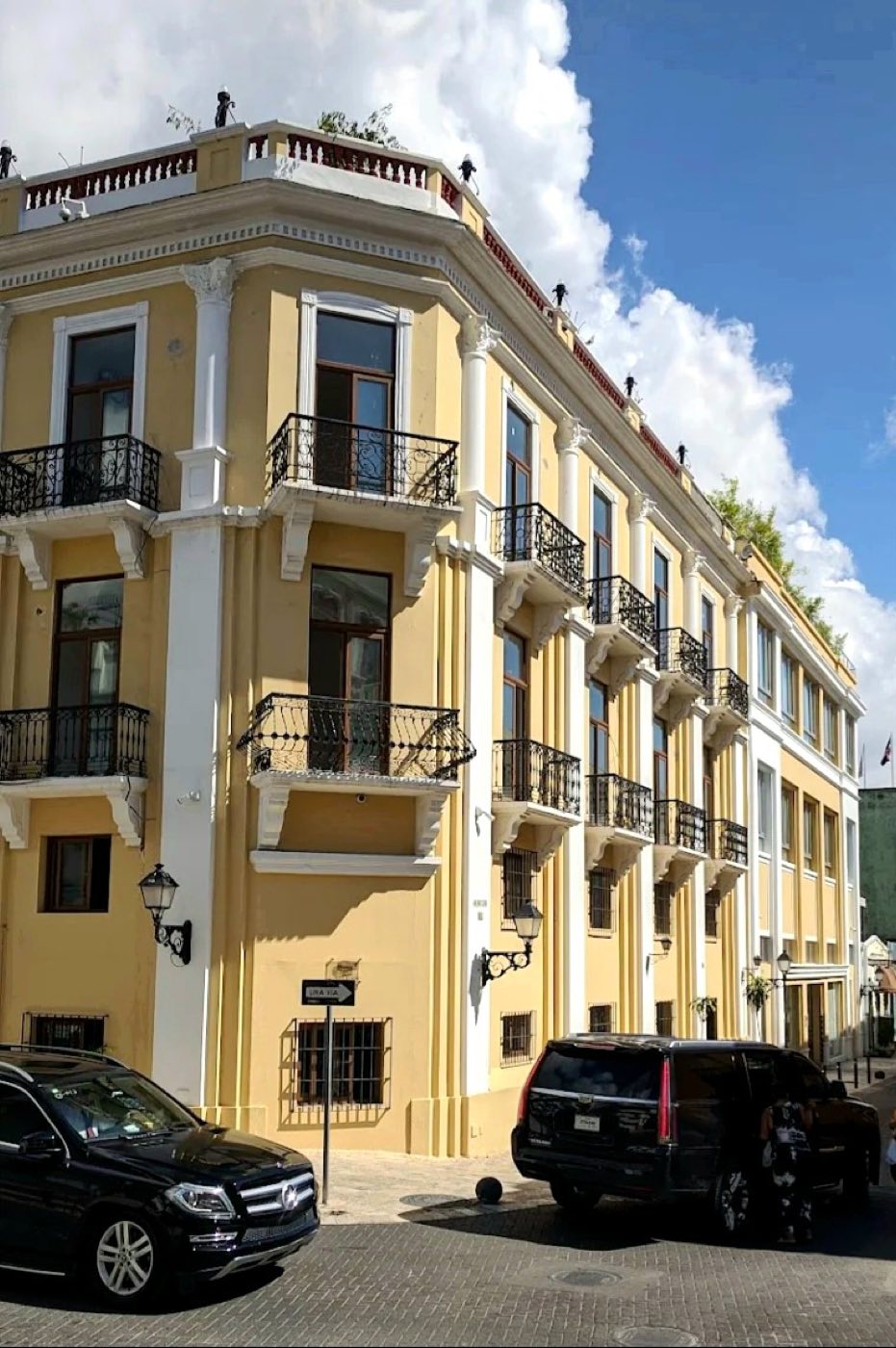
The oldest permanent European city in the Americas, founded in 1496, preserves its original grid of narrow cobbled streets, thick stone houses, and landmark buildings — the Catedral Primada de América, the Alcázar de Colón (Diego Columbus's palace), the Fortaleza Ozama. Walk it in the late afternoon when the limestone facades pick up a warm light and the plazas fill with after-work drinkers and domino games. Stay at least one night in the Zona rather than day-tripping from a resort — the district becomes a different place after dark, quieter, older, and more convincingly itself.
Samaná Peninsula whale watching
Between mid-January and late March, thousands of North Atlantic humpback whales migrate into Samaná Bay to mate and calve — you watch from small boats out of Samaná town as 40-ton animals breach clean out of the water and slap their tails against the surface. Trips run three to four hours and sighting rates in peak season are close to guaranteed. Pair it with a day at Cayo Levantado, a sugar-white sand island in the middle of the bay, or a drive across the peninsula to Playa Rincón, one of the least spoiled big beaches left in the Caribbean.
Punta Cana's all-inclusive resort beaches
The east-coast strip from Bávaro through Punta Cana is the archetype of the modern Caribbean beach vacation — twenty kilometers of coconut-lined white sand and turquoise water, backed by dozens of large all-inclusive resorts in the three-to-five-star range. If you want zero friction — airport transfers handled, meals and drinks already paid for, water sports on the beach — this is what that looks like. Skip across to Isla Saona for the day for a less-developed version of the same coast, and try to get off the resort at least once to see the actual country.
Los Haitises National Park mangroves and caves
On the southern edge of Samaná Bay, Los Haitises is a limestone-karst landscape of mangrove-lined channels, offshore haystack islands, and pre-Columbian Taíno cave paintings you reach by boat from Samaná or Sabana de la Mar. Half-day trips weave through the mangroves, stop at caves with rock art older than Columbus, and give you a chance at pelican and frigatebird colonies that nest on the limestone cliffs. The landscape is roughly what Halong Bay would look like if it were covered in Caribbean forest.
27 Charcos de Damajagua waterfall climbing
Near Puerto Plata on the north coast, a set of 27 natural pools and waterfalls descend through a limestone canyon, and the tour works as a climb upstream through the water followed by a swim-jump-and-slide descent — clambering, chute-sliding, and cliff-jumping off ledges up to eight meters. You go with guides and helmets, and most tours include the first 7 or 12 waterfalls depending on fitness. One of the most fun active half-days anywhere in the Caribbean.
Playa Rincón beach
Voted one of the world's best beaches almost every year for good reason — three kilometers of pale sand backed by coconut palms at the north end of the Samaná Peninsula, with a cold freshwater river running in at one end and almost no development behind it. You reach it by a rough road (4x4 preferable) or by boat from Las Galeras. A couple of rustic beach shacks sell grilled fish with rice, plantains, and cold Presidente beer. It is the Caribbean beach almost unchanged from what the all-inclusive strip used to look like.
Lago Enriquillo and Isla Cabritos
Deep in the southwest, Lago Enriquillo is a saline lake 40 meters below sea level surrounded by dry forest, home to American crocodiles, two endemic iguana species, and large populations of flamingos and other wading birds. Boat trips out to Isla Cabritos in the middle of the lake run a couple of hours and give you close looks at the iguanas, which have become habituated to tour visits. Pair it with a stop at Los Indios de Chacuey petroglyphs for a less-visited corner of the country.
When to Go
December through April is the dry season and the peak for visitors — warm days, low humidity, and reliable sunshine. January through March overlaps with humpback whale season in Samaná and tends to be the single best window for a combined beach-and-wildlife trip. The shoulder months of November and May give you roughly the same weather with fewer crowds and lower prices. June through October is hotter, more humid, and the official Atlantic hurricane season — direct hits are uncommon but the island is in the corridor, so check forecasts in the weeks before travel.
Getting Around
Domestic flights are uncommon for visitors; most people fly into Punta Cana, Santo Domingo (Las Américas), or Puerto Plata and move by road. The toll highway between Santo Domingo and Samaná (Autopista del Nordeste) cut that drive to under three hours, and the road east to Punta Cana is similarly fast. Rental cars are the right call for anything past resort transfers — agencies at the airports are familiar and roadside signage is generally good. Guaguas (local minivans) and the metro in Santo Domingo cover cheap short trips. Uber is reliable in the capital and increasingly in Santiago and Puerto Plata; it is not available in Punta Cana proper.
Cost & Currency
The Dominican peso (DOP) trades around 60 to the US dollar in 2026, and US dollars are accepted at resorts, many tourist restaurants, and for larger purchases, but pesos are better for everyday spending. Cards work almost everywhere in resorts and tourist areas; keep a few thousand pesos in cash for colmados, guaguas, beach vendors, and tips. Expect US$150–350 per night at mid-range all-inclusives in Punta Cana, US$80–160 at boutique hotels in the Zona Colonial, and US$8–15 for a sit-down lunch of la bandera (rice, beans, and meat) outside tourist zones. Tip resort staff US$1–3 per drink or service; in restaurants, a 10% propina is often added automatically and another 5–10% is customary if service was good.
Frequently Asked Questions
- Do I need a visa to visit the Dominican Republic?
- Most travelers from the US, UK, EU, Canada, and many other countries do not need a visa for stays up to 30 days. A tourist card fee is included in the price of most airline tickets. Your passport needs to be valid for the duration of your stay. Check specific requirements for your nationality before travel.
- Is the Dominican Republic safe for tourists?
- Resort areas in Punta Cana, Bávaro, and the Samaná Peninsula are heavily patrolled and generally safe, and the Zona Colonial in Santo Domingo is safe with normal city awareness. Petty theft is the main concern in crowded tourist areas, and driving at night on rural roads is not recommended. Avoid displaying valuables on beaches and carry cash in small amounts.
- When is humpback whale season in Samaná?
- Mid-January through late March is the window, with February typically the most reliable month. Boat tours run from Samaná town and Sabana de la Mar, last three to four hours, and should be booked with operators certified by the Ministry of Environment who follow minimum-distance rules. Cloud cover does not affect sightings meaningfully.
- Can you leave an all-inclusive resort for day trips?
- Yes — resorts can arrange transfers and tours, and you can also book independently with outside operators or rent a car. Popular day trips from Punta Cana include Isla Saona, Hoyo Azul, and Altos de Chavón in La Romana. Check that any outside operator is reputable and confirm pick-up arrangements at the resort gate, since some resorts restrict outside vehicles.
- Do people speak English in the Dominican Republic?
- Spanish is the national language. English is widely spoken at resorts, tourist-facing restaurants, and by tour guides; outside tourist zones, and especially in smaller towns and rural areas, basic Spanish will make every interaction smoother. Learning a few phrases — pedir la cuenta, buenos días, ¿cuánto cuesta? — goes a long way and is appreciated.
Plan a Trip to Dominican Republic
Have you been to Dominican Republic?
Track 195 countries, 50 states & 63 national parks on your map